












As we head into the summer months here in New Zealand, it’s the time of year when the air conditioning in your car goes into overdrive. Trying to keep cool, especially when the weather is particularly humid usually means turning the air conditioning up to full blast and turning the temperature down low.
You might not have run your air-conditioning (air con/AC) on cold for a while – probably since last April or May – and if you turn it on and it’s not as cold as it used to be, the chances are you are running low on refrigerant in your car’s air conditioning system.
The good news for you? It’s something you can fix yourself.
Whilst you can take your car into your local garage and get them to do it for you, it’s actually a pretty simple top-up that can be performed at home as long as you follow some simple steps that we have highlighted below.
How car air conditioning systems work
Before we dig into recharging your car’s air conditioning system, let’s quickly recap how car AC systems work.
An air conditioner, in a car or home has three main parts: a condenser, a compressor, and an evaporator.
The condenser and the evaporator are two radiators that are effectively connected in a loop.
The compressor is situated between them on one side of the loop.
Car AC systems are closed systems, sealed from the outside and typically filled with a refrigerant, in most cases R134a.
The compressor takes low-pressure, gaseous, R134a, compresses it (creating heat), then sends it to the condenser, where the heat is dissipated to the outside.
After the condenser, the liquid refrigerant travels to the evaporator, located inside the passenger compartment, where it is allowed to expand, removing heat, and cooling the evaporator. The fan directs air over the evaporator, then out of the air vents in your car.
Can I recharge my car AC myself?
Charging your car AC yourself is relatively inexpensive and easy to do and can be completed in a few minutes provided there are no leaks on your system.
Whilst it is one of the easier jobs to carry out on your own vehicle, topping up the refrigerant on your car’s AC system is still a task that requires you to follow some specific steps as you can quickly cause bigger issues if it is not done correctly.
How do I know if my car's air conditioning needs to be recharged?
The most common causes of broken air conditioning are leaks or compressor issues. If your air is blowing cool but not cold, the problem could be a clogged filter, cooling fan problem, radiator trouble, or it could simply be that you need to recharge your AC.
There are a few things you can do to quickly diagnose the potential problem. These include:
- Check to see that the cooling fans on the condenser or radiator are running when the air conditioning is on.
- Look for any restrictions like leaves, bugs, and other debris that would keep air from passing over the condenser.
- Check the cabin air filter to ensure that it is not clogged.
- Check that the clutch is engaging on the compressor.
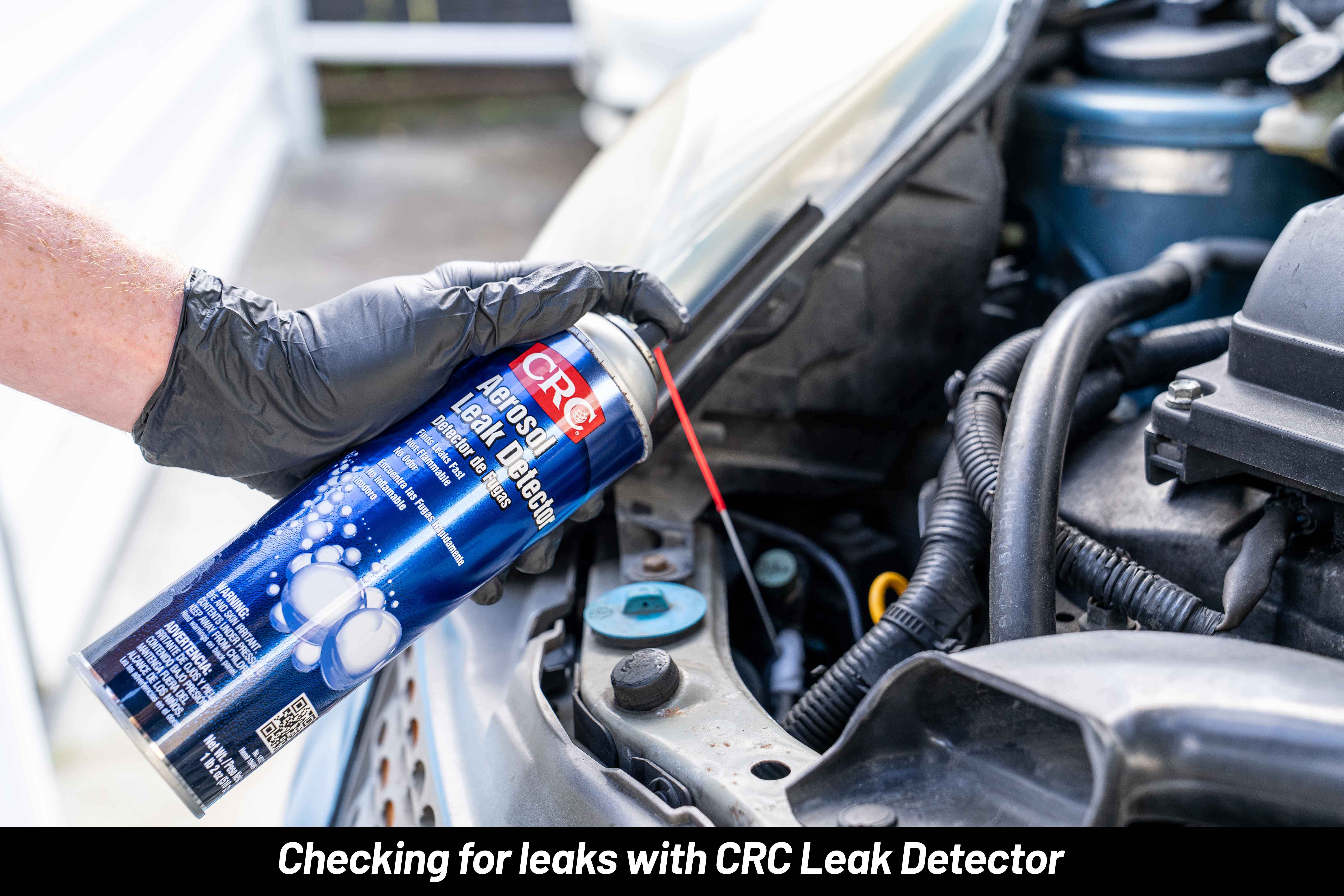
- Check for leaks in the system using CRC Leak Detector.
If you can’t detect any of these issues, it’s likely you need to recharge your AC so grab a can of CRC AC Charge and follow the steps identified below.
How do I charge my car’s air conditioning myself?
The easiest way to charge your car’s AC system yourself is to use CRC AC Charge – a unique all-in-one application method that uses professional quality R134a refrigerant. This is a fast and effective way to recharge the air conditioning system on your vehicle.
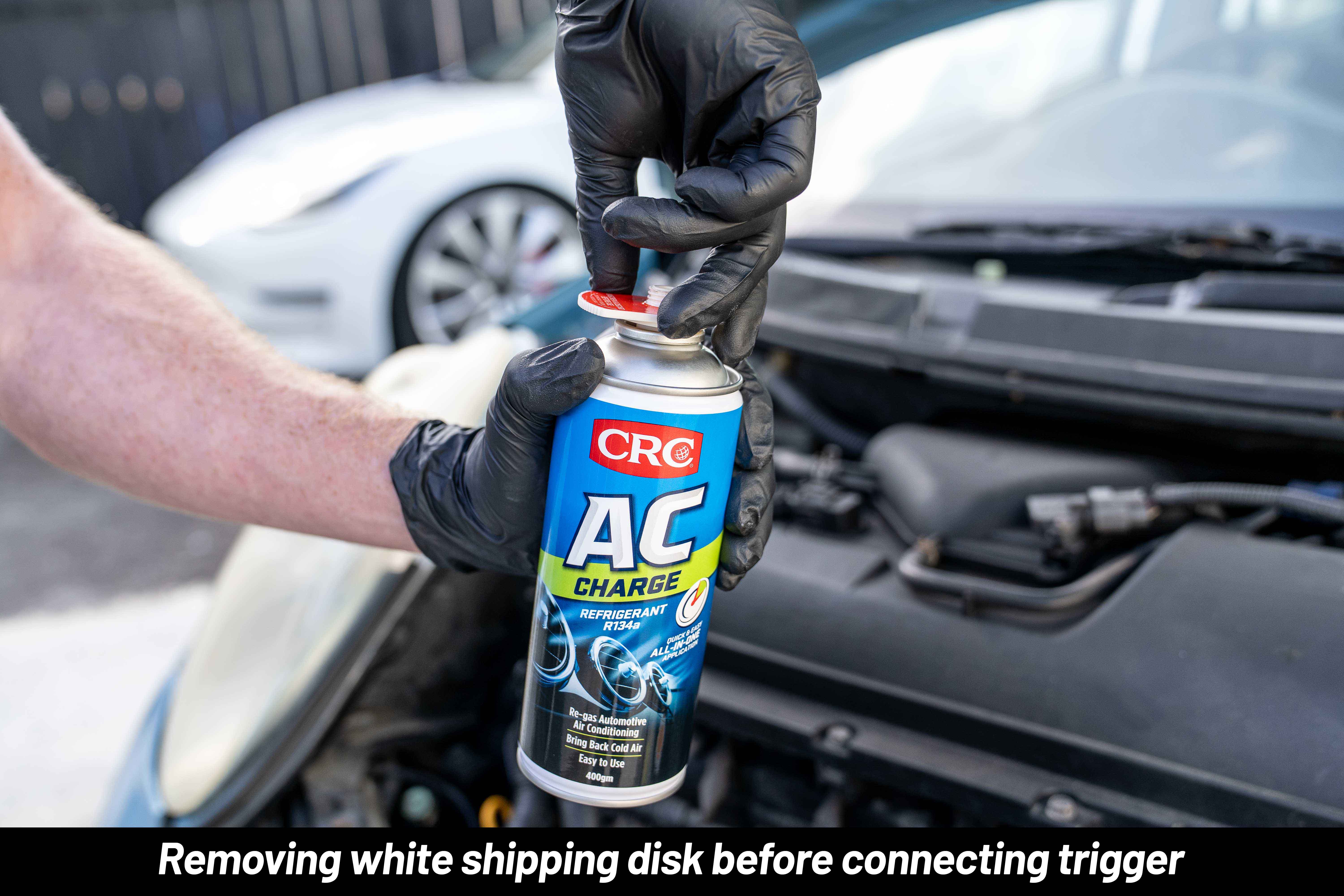
CRC AC Charge adds refrigerant R134a to the air conditioning system via the low-pressure inlet. The process can be completed within minutes following the steps below.

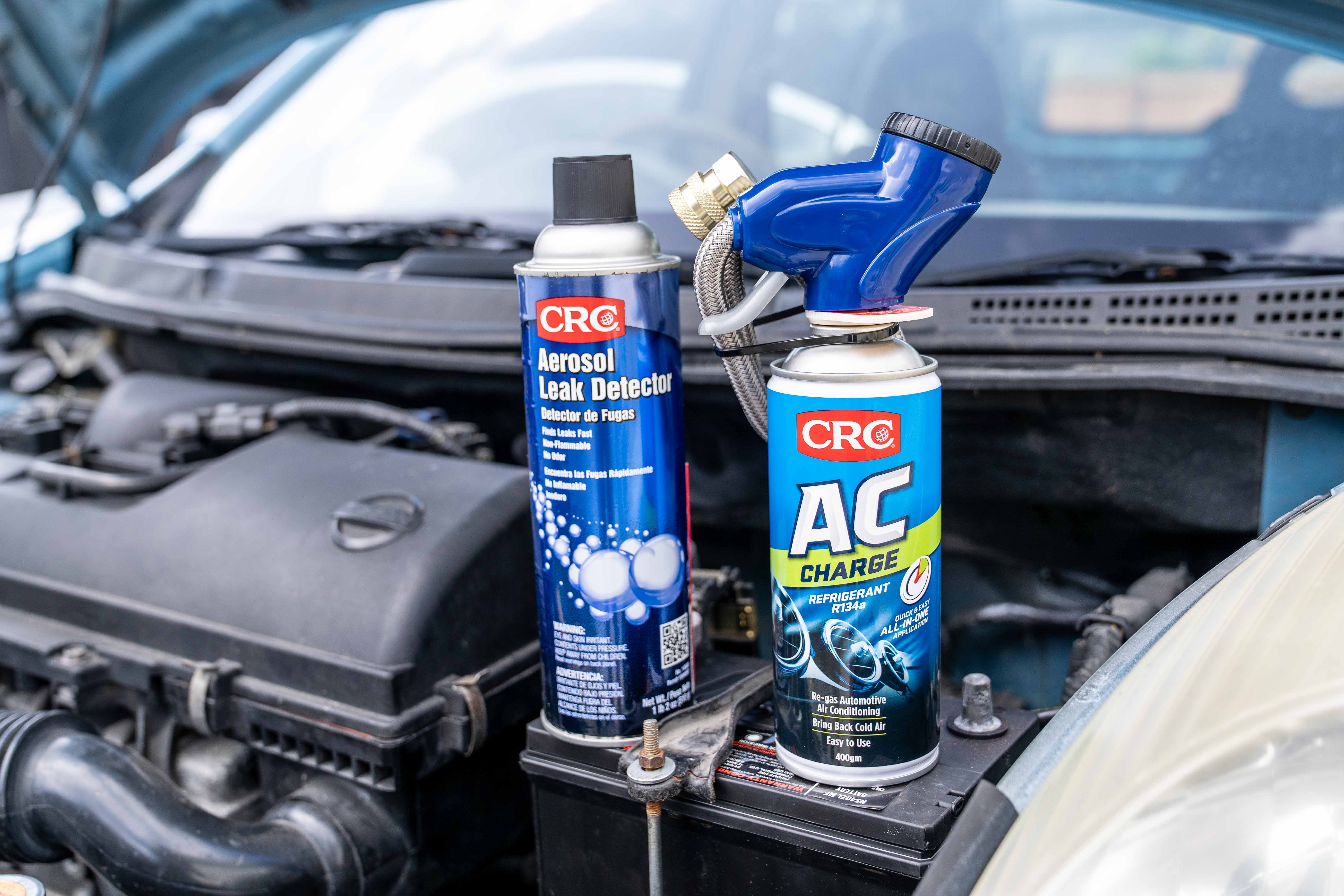
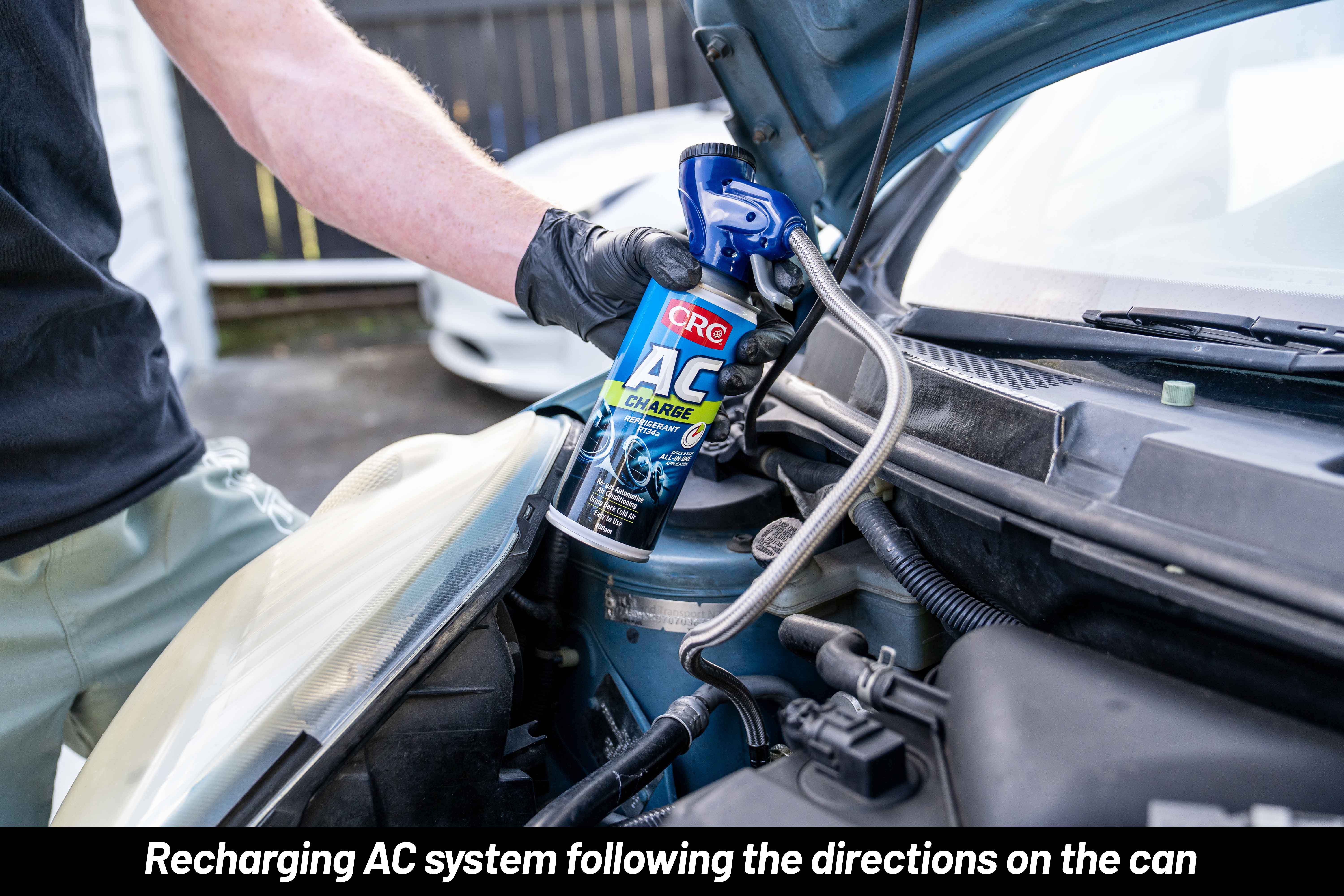
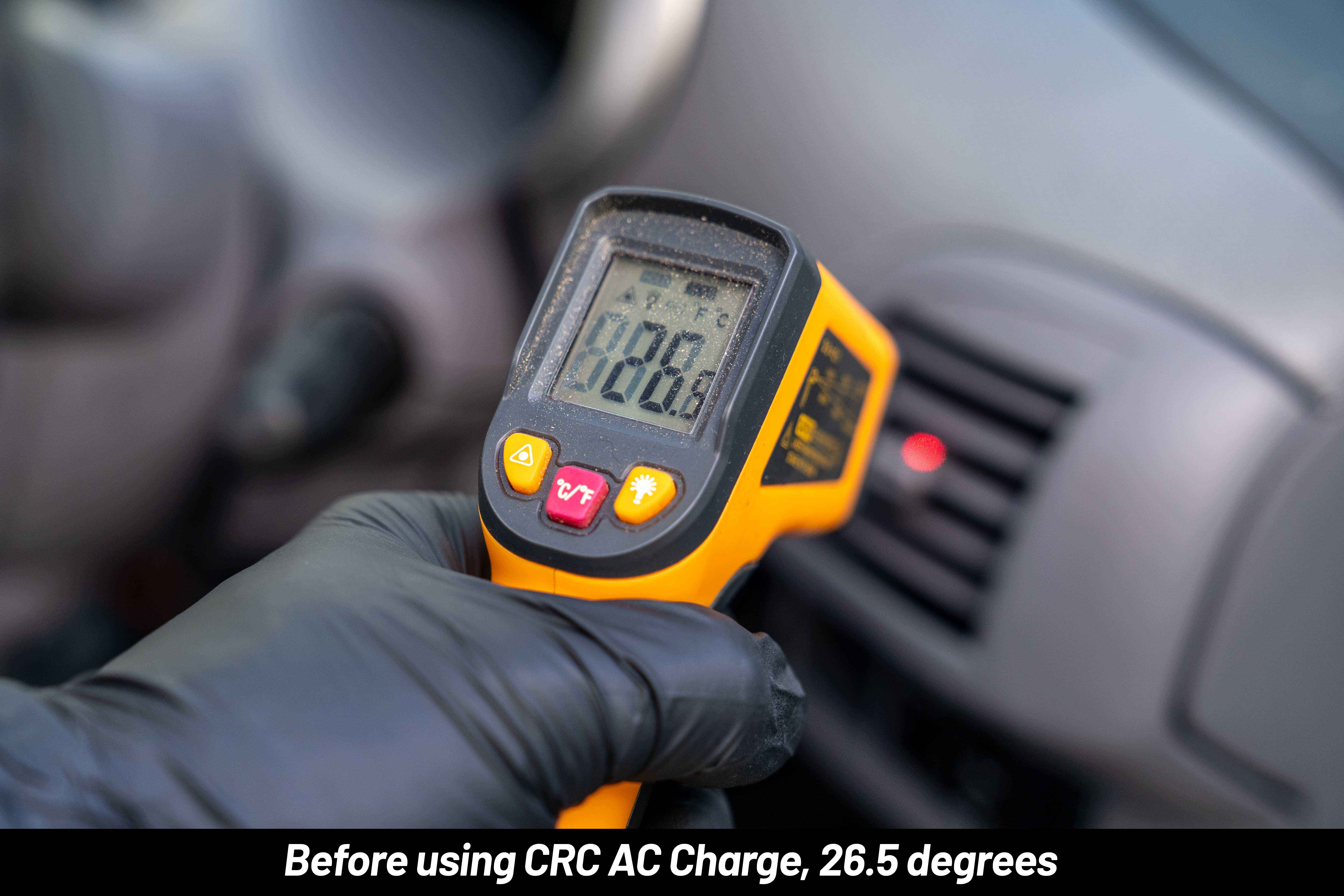
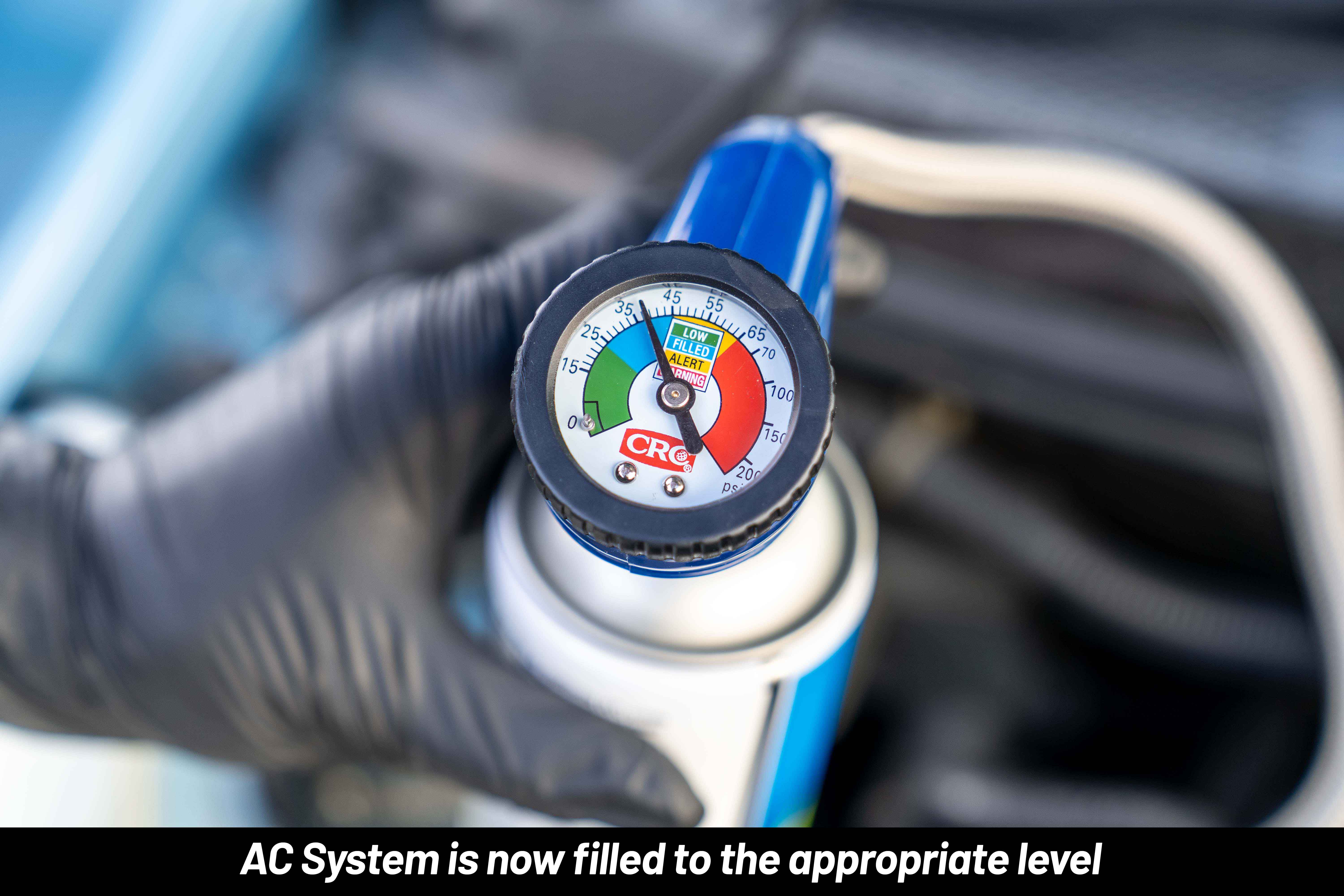
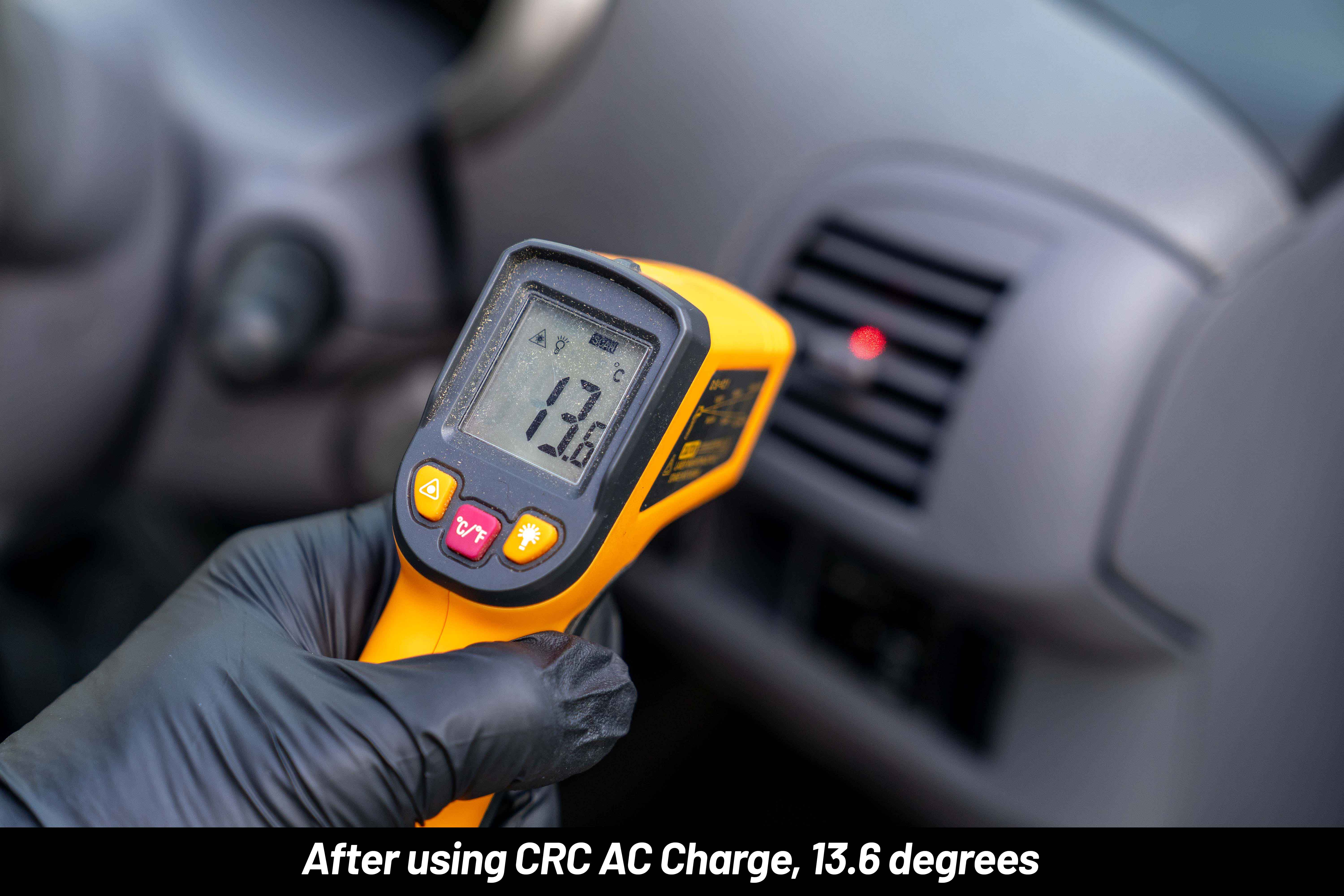
CRC AC Charge is an inexpensive, quick way to refill vehicle air-conditioning systems with refrigerant. With the unique all-in-one application method and professional quality R134a refrigerant, it is a fast and effective way to recharge the air conditioning system.
If the air coming from the air vents in the car is not as cold as it used to be, the air conditioning system could be running low on refrigerant. CRC AC Charge adds refrigerant R134a to the air conditioning system via the low-pressure inlet. The process can be completed within minutes.
We all have a part to play in preventing global warming. R134a is a known greenhouse gas and therefore should not be released into the atmosphere. Check that the air-conditioning system does not have any leaks before using CRC AC Charge. If unsure, it is recommended to consult a vehicle air-conditioning specialist. Under the Climate Change Response Act 2002, it is an offence to knowingly release R134a into the atmosphere.
CRC AC Charge FAQ
My AC is not blowing as cold as I would like. If I add more refrigerant will it make the air colder?
Yes and no. If your system is low in pressure then it will not blow as cold as it should. Adding refrigerant to the recommended pressure will make the air blow colder. If your system's pressure is correct, then adding refrigerant will not make the air colder. In fact, adding more refrigerant could cause more damage by overcharging the system.
How do I tell if my air conditioning system has a leak?
There can be a few clear signs that you may have a leaky system:
- Check for any discharge along the air-conditioning lines and connections
- The pressure of your refrigerant is nil when you initially check the pressure
- The air-conditioning clutch will fail to engage
- Test with a leak detector product like CRC Leak Detector
How do I locate the low-pressure port?
We recommend consulting the owner’s manual to locate the low-pressure port. The low-pressure port is typically located on the line that runs from the compressor through the evaporator and up to the condenser on the low-pressure side of the AC system. CRC AC Charge hoses will only fit the low-pressure port on R134a vehicles.
Can I add R134a directly to my R12 or other type of AC system?
No.
How much refrigerant do I put in?
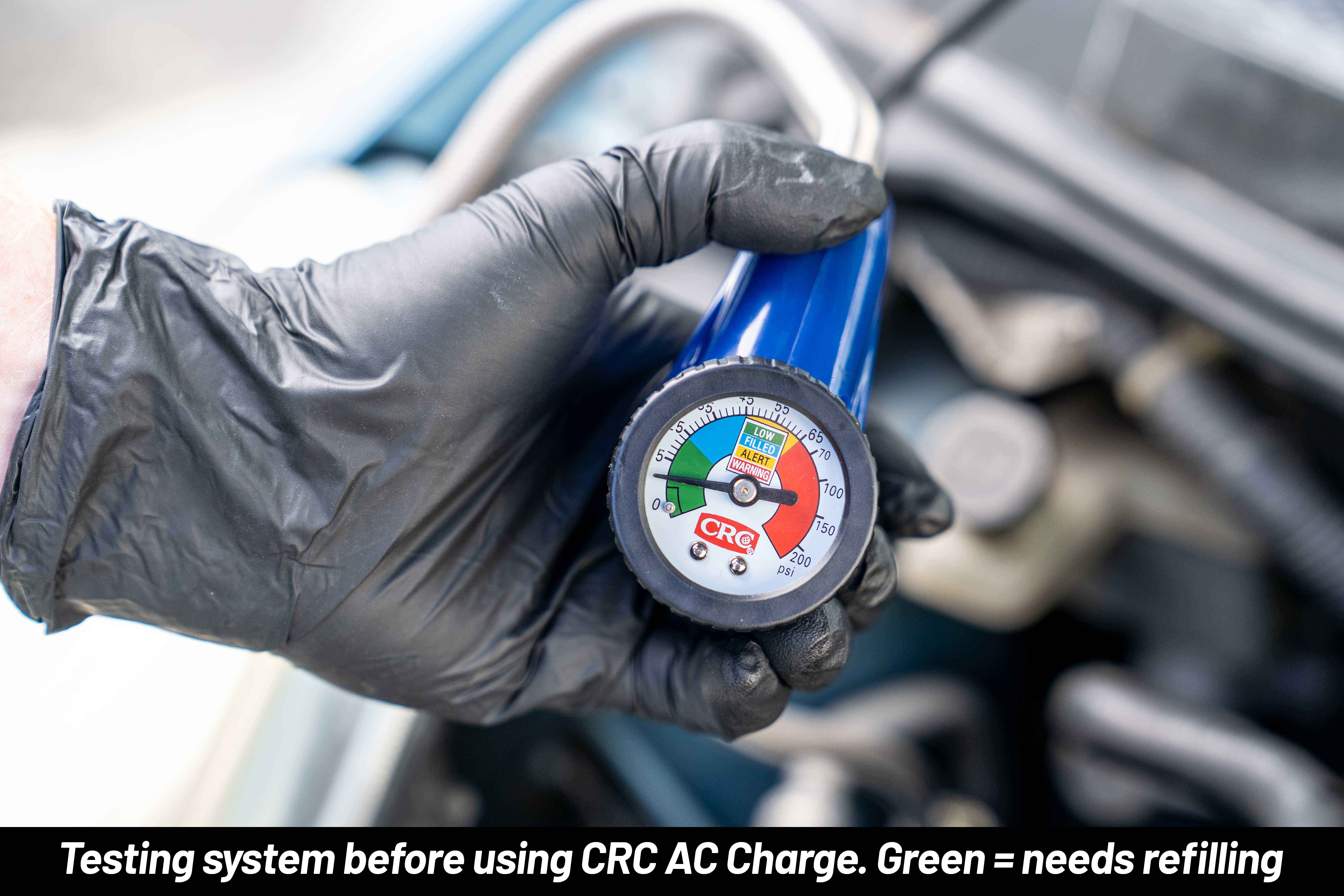
The gauge shows the desired levels to fill to.
Do I need to vacuum out the system before charging?
Only if a part of the system has been replaced or the system pressure is lower than 10psi.
When checking the low-pressure port pressure I get two readings, which one should I use?
This occurs when the compressor cycles on and off, the lower of the two when the compressor cycle is on is, and the higher when the compressor cycle is off. You want to ensure the AC setting is on max cold, and the fan is on high. This should ensure the compressor cycle is always on. You want to take the reading when the compressor cycle is on.
Is my compressor working?
When the compressor is turned on (i.e. AC turned on), the centre of the compressor clutch will turn with the outer pulley. If this does not occur then the compressor may need to be replaced.
Is my compressor on?
To see if the compressor is on or off, identify the clutch at the front of the compressor. The centre of the clutch should be spinning when the compressor cycles on (AC on). Note: the pulleys are always spinning, while the centre of the clutch may not (AC off).
My pressure is correct but the air is still blowing warm, why?
This could be due to multiple reasons. The compressor may not be working correctly. In any case, you should seek an air-conditioning specialist’s opinion.
Can I vent the refrigerant if it is overcharged?
It is an offence to knowingly release R134a into the atmosphere under the Climate Change Response Act 2002. Evacuation of the system will need to be done by an air-conditioning specialist.
What happens to an overcharged system?
If the system is overcharged a pressure cut off switch may activate and stop you’re AC compressor from running. If the system is overcharged consult an air-conditioning specialist to remove the refrigerant. It is an offence to knowingly release R134a into the atmosphere under the Climate Change Response Act 2002.
Can I use CRC AC Charge in my hybrid vehicle?
If the vehicle has an R134a AC system then CRC AC Charge should be suitable – check with the manufacturer before using.
Can I use CRC AC Charge in my hybrid vehicle's electric compressor?
No.
Is it illegal to release R134a into the atmosphere?
Yes. R134a is a known greenhouse gas and therefore should not be released into the atmosphere. Check that the air-conditioning system does not have any leaks before using CRC AC Charge. We recommend testing the system with a leak detector product such as CRC Leak Detector before using CRC AC Charge. If unsure, it is recommended to consult a vehicle air-conditioning specialist. Under the Climate Change Response Act 2002 it is an offence to knowingly release R134a into the atmosphere.